Friday, 5 June 2015
Feedback Pitch
After pitching our Documentary idea I showed my documentary idea to one of the other media teachers just to get their opinion on my documentary, I was told that adjusting the idea would be best or change the idea completely. I felt that because I had planned the documentary so much it would be a shame to chuck it all away and start all over again so I have stuck with the idea of "Life As A Sixth Former".
Although one teacher didn't really like the idea, the other people who I showed the documentary pitch to liked the idea and liked what I could possibly do with it. They were really interested in to what the documentary could be like and what the possible outcome could be.
I decided after though that I would change the name of the documentary from "Day In The Life Of A Sixth Former" to "Life of A Sixth Former" This was because we didn't think we could get all the footage that we thought we could do in one day. So we decided that we are going to film over a number of days so that we can get a good amount of shots so that there isn't any problems with being short on clips.
We wanted to show different areas of the school in the shots so that the interviews would show different areas. We didn't want it to be all the same areas because there are different places to go in the school.
Another point made was that because I was working on my own they suggested it was a lot of work they suggested me working in a group where the other people can help to do more work instead of struggling and not getting the best documentary.
Although one teacher didn't really like the idea, the other people who I showed the documentary pitch to liked the idea and liked what I could possibly do with it. They were really interested in to what the documentary could be like and what the possible outcome could be.
I decided after though that I would change the name of the documentary from "Day In The Life Of A Sixth Former" to "Life of A Sixth Former" This was because we didn't think we could get all the footage that we thought we could do in one day. So we decided that we are going to film over a number of days so that we can get a good amount of shots so that there isn't any problems with being short on clips.
We wanted to show different areas of the school in the shots so that the interviews would show different areas. We didn't want it to be all the same areas because there are different places to go in the school.
Another point made was that because I was working on my own they suggested it was a lot of work they suggested me working in a group where the other people can help to do more work instead of struggling and not getting the best documentary.
Thursday, 4 June 2015
Evaluative Commentary
After releasing our Documentary we reviewed it by talking about what was going on and how we filmed the documentary as an explanation to the audience.
We went over what went well and what we could have improved if we were to film it again.
With the documentary we found that the beginning was interested as we were basically giving people a tour of the school so starting off at the school sign and gradually getting to the school common room then into the class room. If we were to do this again i think we would have done more footage of the school that the sixth form see but we would have speeded it up so that it wasn't too boring.
After that we explained the students we would be following for the documentary and how they are around school before we went in to the interviews.
We started off with interviewing Jade and we had some footage of her walking around the school and how she was in class and around her friends. We mixed all of this with her interviews so that we could show different angles when filming her. If we were to do this again I think that we would have made sure that we picked the surroundings better for the interview as often the background noise was very loud.
After that we started interviewing Olly, the footage we had originally got of Olly wasn't any good so we had to re shoot his interviews so that we could hear him and get more information out of him as he doesn't talk much! We interviewed him outside where we could here him a lot better and again we put clips of him in class mixed into the interviews too.
Lastly we filmed Tyler, he was the most interesting person to film as he had a lot to say and he enjoyed being filmed so we managed to get a lot more footage of him. We also added footage of him playing around having fun whilst also being serious doing his work. At the end there is a clip of Tyler stating that he feels like a Kardashian being filmed all the time, which was funny because that was what we were basically doing.
At the end we have some black and white pictures of Jade, Olly and Tyler where we have spoken about what they are doing now and what they plan to do next year, we felt this was a good end because it was an ending to the documentary.
We went over what went well and what we could have improved if we were to film it again.
With the documentary we found that the beginning was interested as we were basically giving people a tour of the school so starting off at the school sign and gradually getting to the school common room then into the class room. If we were to do this again i think we would have done more footage of the school that the sixth form see but we would have speeded it up so that it wasn't too boring.
After that we explained the students we would be following for the documentary and how they are around school before we went in to the interviews.
We started off with interviewing Jade and we had some footage of her walking around the school and how she was in class and around her friends. We mixed all of this with her interviews so that we could show different angles when filming her. If we were to do this again I think that we would have made sure that we picked the surroundings better for the interview as often the background noise was very loud.
After that we started interviewing Olly, the footage we had originally got of Olly wasn't any good so we had to re shoot his interviews so that we could hear him and get more information out of him as he doesn't talk much! We interviewed him outside where we could here him a lot better and again we put clips of him in class mixed into the interviews too.
Lastly we filmed Tyler, he was the most interesting person to film as he had a lot to say and he enjoyed being filmed so we managed to get a lot more footage of him. We also added footage of him playing around having fun whilst also being serious doing his work. At the end there is a clip of Tyler stating that he feels like a Kardashian being filmed all the time, which was funny because that was what we were basically doing.
At the end we have some black and white pictures of Jade, Olly and Tyler where we have spoken about what they are doing now and what they plan to do next year, we felt this was a good end because it was an ending to the documentary.
Interview & Evaluation
In this interview I spoke to Jade Mason where I asked her about what she likes about Ravens Wood School.
She was very positive about her transition from GCSE to A Level and she was very responsive.
One of the best answers Jade gave was when she answered the question: What do you do at the weekends?
She answered that she works on her work mainly but goes out and enjoys herself as well.
We weren't looking for the answer where she would spend her time working and I liked that she gave an honest answer to the question.
In this interview you can see that Jade is confident in what she is answering as she is smiling a lot and answering mostly in full sentences. She also in some other places looks a bit un interested because as you can see she looked a bit embarrassed to answer the questions.
The good thing about Jade is that she includes the questions in the answer which is really helpful when it comes to editing because it saves you from putting sub titles underneath.
My interview techniques were to ask the questions as straight on as possible, I hadn't pre prepared Jade to what the question was going to be because I didn't want it to look staged or too prepared because some times the "umm" make it more interesting because you want to know what the interviewee is thinking but your having to wait for them to answer.
Wednesday, 3 June 2015
Camera Shot Analysis
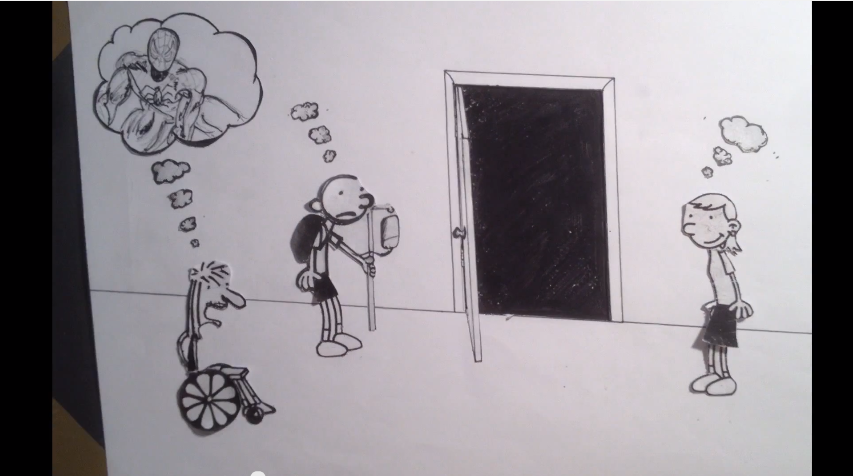
When filming our animation we didn't use many shots as it was just focusing on one area of the page as there wasn't really anywhere to go when filming. We would move the character so that it looked like different types of shots but we never really moved the camera.

We used a long shot for the majority of the animation because we wanted to make sure that we could get every bit of detail into our animation. We found that this was the most successful shot for us as we didn't think there was really places to move to throughout the animation.

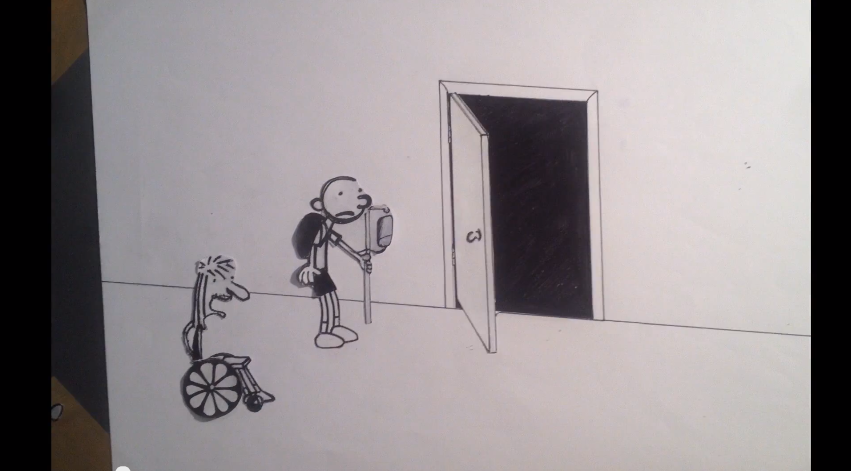
We tried to use a pan shot but we didn't use the camera to do this, we used the boy. We moved him across the room which made it look like a pan shot. This was easiest for us because panning of it would have been to difficult because the lay out for our animation wasn't that big.
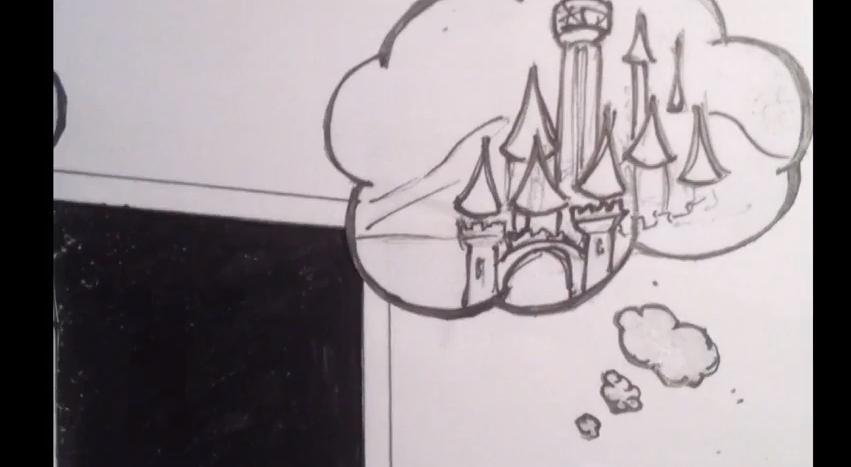
We also used Zoom because we went into a dream so being able to show the intensity of the dream and showing how detailed the castle was would show how detailed the dream was. Zoom worked really well for us because we wanted to go in to the dream and make sure that it was as effective as possible.After doing this we have found that it was quite hard to use a great variety of shots. If we were to have done it another way, we might have been able to add more shots but it was quite hard to do that.
Analysis of Movement
With our animation we tried to make sure that we could make it as realistic as possible. When filming there was a lot of stopping and starting so that we could get the shots right. We took a lot of time making sure that the movements were as effective as possible.

With the door we had to make sure that you could get the movement of the people walking towards the door with the same speed as them walking. To open the door it took 5 shots to make sure that it opened at the right speed. This took a bit of time to make sure we got a detailed movement.

With the people walking we had to make sure that we got the right speed and make it look as realistic as possible because we found that it made them look like they were moon walking which is what I didn't want to happen. This took quite a long time as we wanted to get it perfect and it was quite hard when you are trying to correct the mistakes that have already been made.
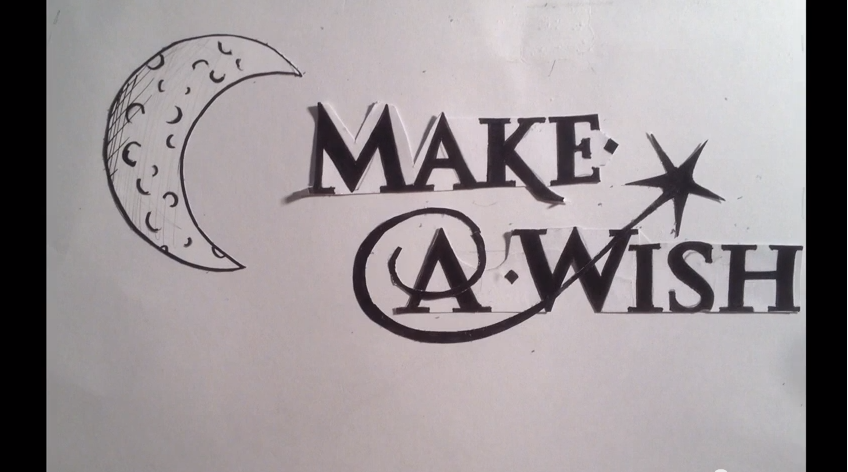
We then shot the logo where we found that we needed it to blend with the background as much as possible. Because it was paper we found that often you could see the cut out which is what we didn't want. The movement here was slow but we found that it was easy to blend in and wasn't too hard. This took about 20 minutes to get to the standard that we were looking for because without this it wouldn't have been as good as this was the ending of the animation.

With the door we had to make sure that you could get the movement of the people walking towards the door with the same speed as them walking. To open the door it took 5 shots to make sure that it opened at the right speed. This took a bit of time to make sure we got a detailed movement.

With the people walking we had to make sure that we got the right speed and make it look as realistic as possible because we found that it made them look like they were moon walking which is what I didn't want to happen. This took quite a long time as we wanted to get it perfect and it was quite hard when you are trying to correct the mistakes that have already been made.
We then shot the logo where we found that we needed it to blend with the background as much as possible. Because it was paper we found that often you could see the cut out which is what we didn't want. The movement here was slow but we found that it was easy to blend in and wasn't too hard. This took about 20 minutes to get to the standard that we were looking for because without this it wouldn't have been as good as this was the ending of the animation.
Animation Feedback
1.) What do you think the message of our Animation is ? I think that the message of the animation is the dreams of the children.
2.) What do you think is the best bit of the Animation ? The best bit of the animation is where the dreams float up and create the logo.
3.) What would you improve if you could? If I was to improve the animation I would just add more colour to it so that its more interesting for the younger children.
4.) Would you like to see this on TV. Yes, I think that this would be a great powerful advert.
1.) What do you think the message of our Animation is ? The message of this animation is children dreaming of a last wish they would like.
2.) What do you think is the best bit of the Animation ? The best bit of the animation would be when the children all walked through the door to see their dreams.
3.) What would you improve if you could? I would improve how the animation ended with the music, I would have faded the music better.
4.) Would you like to see this on TV. Yes, I would love to see this on TV, with some good editing the animation has potential.
2.) What do you think is the best bit of the Animation ? The best bit of the animation is where the dreams float up and create the logo.
3.) What would you improve if you could? If I was to improve the animation I would just add more colour to it so that its more interesting for the younger children.
4.) Would you like to see this on TV. Yes, I think that this would be a great powerful advert.
1.) What do you think the message of our Animation is ? The message of this animation is children dreaming of a last wish they would like.
2.) What do you think is the best bit of the Animation ? The best bit of the animation would be when the children all walked through the door to see their dreams.
3.) What would you improve if you could? I would improve how the animation ended with the music, I would have faded the music better.
4.) Would you like to see this on TV. Yes, I would love to see this on TV, with some good editing the animation has potential.
1.) What do you think the message of our Animation is ? The message of this animation I think is helping children with their last wish.
2.) What do you think is the best bit of the Animation ? The best bit would be the dream of the castle and how detailed it was.
3.) What would you improve if you could? I don't think there is anything I would improve as I feel the animation has been done really well.
4.) Would you like to see this on TV. I would love to see this on TV this is so interactive and really shows the meaning of the charity.
2.) What do you think is the best bit of the Animation ? The best bit would be the dream of the castle and how detailed it was.
3.) What would you improve if you could? I don't think there is anything I would improve as I feel the animation has been done really well.
4.) Would you like to see this on TV. I would love to see this on TV this is so interactive and really shows the meaning of the charity.
Tuesday, 2 June 2015
What Is A Documentary
A Documentary film is a non fictional motion picture intended to document some aspect of reality, primarily for the purpose of instruction or maintaining a historical record.

A documentary example would be the Act of Killing where it was directed by Joshua Oppenheimer. This documentary was filmed over several years where they expose the horrifying mass executions in Indonisia of communists. They documented the people who were involved in the killings and how they feel about it now. They actually re-enacted it all and by the end they felt pity for the people they had killed and struggled.
Documentaries can be made into short ones like the ones we are doing for this unit. You start with a topic and develop what you want the end result to be. Our documentary will be up to 5minuets long and we will then make sure that the footage is the best quality as possible and makes sense.

A documentary example would be the Act of Killing where it was directed by Joshua Oppenheimer. This documentary was filmed over several years where they expose the horrifying mass executions in Indonisia of communists. They documented the people who were involved in the killings and how they feel about it now. They actually re-enacted it all and by the end they felt pity for the people they had killed and struggled.
Documentaries can be made into short ones like the ones we are doing for this unit. You start with a topic and develop what you want the end result to be. Our documentary will be up to 5minuets long and we will then make sure that the footage is the best quality as possible and makes sense.
Team Meeting Minutes
In our team meeting we discussed who would do which roles and how our Animation would be made.
We started talking about who would be in charge of what roles so we decided that we would put Luke in charge of the design and drawing because we felt that by doing that we would be more of a productive team.
We then decided that by me doing the admin side it would help to make sure that we got all the information that was needed in order to make the whole animation unit a success.
Luke was to start with the story boards and working out what we thought would work best and the best way to do it. We decided that the best way to do our animation would be drawn animation where you could find the best way to put the message across.
We then discussed the best way to film the animation and how we would use the camera's to collect the images. We decided that we would use a clamp to hold the camera above the drawings, this would help show the whole area of the drawings.
With the paper work I was doing, I made sure that I had used the templates provided so that I could develop the paper work so it relates with the Animation and helps us to get the best possible grade.
We started talking about who would be in charge of what roles so we decided that we would put Luke in charge of the design and drawing because we felt that by doing that we would be more of a productive team.
We then decided that by me doing the admin side it would help to make sure that we got all the information that was needed in order to make the whole animation unit a success.
Luke was to start with the story boards and working out what we thought would work best and the best way to do it. We decided that the best way to do our animation would be drawn animation where you could find the best way to put the message across.
We then discussed the best way to film the animation and how we would use the camera's to collect the images. We decided that we would use a clamp to hold the camera above the drawings, this would help show the whole area of the drawings.
With the paper work I was doing, I made sure that I had used the templates provided so that I could develop the paper work so it relates with the Animation and helps us to get the best possible grade.
Wednesday, 20 May 2015
Final Proposal
To: Ms Moore
From: Olivia Griffiths, Tom Madkins & Kieran McWilliam
Date: 20th April 2015
Subject: Proposal
Proposed Research Topic:
I am proposing my idea of a documentary based on sixth form life, this will show three students and watch how they act around school, they will also answer questions regarding their daily activities and what they find themselves doing on the weekend.
Purpose:
From this documentary we aim to show this to students who are coming into the school so that they can see what the sixth form at RWS is about. We want them to see it from different point of views and see that as long as you work hard you can still go out and have fun.
Background:
The background of this documentary was looking into what the sixth form at RWS is about and we wanted to show prospective students the true meaning of it by having a short documentary taking all the skills and friendships that they make at school and showing that they still are able to enjoy themselves at the same time.
Scope:
For this documentary we are investing 3months of our time in to it, by firstly researching the best people for the documentary and who would portray the best side of the school. We are then going to film for a few weeks making sure that we have the best footage possible for the documentary. After that we will then take all the footage to production and put it together editing the crutial bits.
From: Olivia Griffiths, Tom Madkins & Kieran McWilliam
Date: 20th April 2015
Subject: Proposal
Proposed Research Topic:
I am proposing my idea of a documentary based on sixth form life, this will show three students and watch how they act around school, they will also answer questions regarding their daily activities and what they find themselves doing on the weekend.
Purpose:
From this documentary we aim to show this to students who are coming into the school so that they can see what the sixth form at RWS is about. We want them to see it from different point of views and see that as long as you work hard you can still go out and have fun.
Background:
The background of this documentary was looking into what the sixth form at RWS is about and we wanted to show prospective students the true meaning of it by having a short documentary taking all the skills and friendships that they make at school and showing that they still are able to enjoy themselves at the same time.
Scope:
For this documentary we are investing 3months of our time in to it, by firstly researching the best people for the documentary and who would portray the best side of the school. We are then going to film for a few weeks making sure that we have the best footage possible for the documentary. After that we will then take all the footage to production and put it together editing the crutial bits.
Crew Roles
Director:
Olivia Griffiths
Definition:
the director is the person that organises everything so that everything is in the
right place at the right time and is in charge of everything that is happening
during the production of the filming.
Producer:
Luke Biley
Definition:
the producer is second in charge during the filming as he as the producer has
to make sure that everything is happening at the right time just like the
director he follows what he does but has less control over what everything that
happens. his (the producer) main priorities is to make sure that the filming is
happening correctly and everything is in place.
Director
of Photography (D.P.) Luke Biley
Definition:
as the director of photography every shot is taken as a picture has to be taken
while the camera is still, making sure that the same lighting is being used in
every image so that with the final edit looks good and has consistent
lighting.
Editor:
Olivia
Griffiths
Definition:
as an editor you are in charge of the editing when editing the main thing you
need to do is to cut and crop together bits of film to make a final piece that
looks good and professional.
Camera
Operator: Luke Biley
The
camera operator the camera operators are in charge of the grips of the cameras
they make sure the camera does not shake when filming.
Minor
Roles
Assistant Camera (A.C.): Olivia Griffiths
definition
the assistant camera helps the camera operator when filiming this could be
helping with some extra grip or making sure the lighting for the project is
good at all times anything to help the camera operator.
Assistant
Director : Olivia Griffiths
The
assistant directors job is to complete any smaller jobs the director might want
to do this is to make there job a bit more easy.
Art
Director: Luke Biley
It is
the art directors job to create any things that need to be made for the video
for example: props.
Casting
Director: Olivia Griffiths
The casting
director is in charge of recruitment for the production they would look for
potential people who will work on the project they have to determine if they
are right for the job the casting director is vital for the making of the
project.
Location
Scout: Olivia Griffiths
The
location scout looks at potential sites for filming they have to determine if
the site is good to film on and if it matches the theme of the production and
if it also matches the description of the directors
wishes.
Production
Manager (P.M.): Luke Biley
The
production managers job is to manage all the production aspects of the
project.
this means that they are in charge of logistics and budget there
job is very important as if they did a bad job it might bankrupt the
project.
Screenwriter:
Luke Biley
The
screenwriters job is to write the script for the project this means they are
creating the story for the project.
the screenwriters job is very
important as they are creating the raw story for the project this means they
have a say in the success of the project as people will judge the quality of
the story and idea.
Monday, 18 May 2015
Peer Assessment of Documentary
During our lesson we assessed each others documentaries and gave each other some constructive feedback.
When discussing our documentary we realised that it doesn't focus mainly on our title which was "Day In The Life Of A Sixth Former". After reviewing the documentary we discovered that we hadn't filmed them over a whole day and we had resolved to other days so that we could get more footage.
We have therefore re-named the documentary "Life Of A Sixth Former" this just shows that we have noticed its not about their day its about what they do at Sixth Form and how they fit in and get on with their time at the school.
We were assessed by our class on our documentary and the majority of feedback was positive.
However we did receive some critical feedback where they mentioned at some places you can't always understand the interviewee, we had previously noticed this, however we thought by turning up the noise of their speech that this would improve the clips.
This did not work so we have decided that we are going to add sub titles so that it is clearer.
Since getting feedback we have decided that there isn't a lot we need to change, it is just about improving what there is already, making sure the speech is clear and making sure that there is good transitions and it looks as good as possible.
When discussing our documentary we realised that it doesn't focus mainly on our title which was "Day In The Life Of A Sixth Former". After reviewing the documentary we discovered that we hadn't filmed them over a whole day and we had resolved to other days so that we could get more footage.
We have therefore re-named the documentary "Life Of A Sixth Former" this just shows that we have noticed its not about their day its about what they do at Sixth Form and how they fit in and get on with their time at the school.
We were assessed by our class on our documentary and the majority of feedback was positive.
However we did receive some critical feedback where they mentioned at some places you can't always understand the interviewee, we had previously noticed this, however we thought by turning up the noise of their speech that this would improve the clips.
This did not work so we have decided that we are going to add sub titles so that it is clearer.
Since getting feedback we have decided that there isn't a lot we need to change, it is just about improving what there is already, making sure the speech is clear and making sure that there is good transitions and it looks as good as possible.
Consideration of Camera
In animation there are often a lot of different shots to show movement in the animation.
To shoot our animation we placed the camera on a stand and tilted the camera so that it was above the paper that we were about to film, we had to consider a lot of possible problems that may have occurred.
By placing the camera above what we were about to film gave us the opportunity to have the paper cut outs on a flat surface and make it easier to move them so that you don't have to stick them to the wall and risk them falling off. With them being on a flat surface there is less risk of the cut outs moving drastically.
When putting the camera at this angle we had to consider the effect that the camera might give off.
The camera could be shadowed on to the page, this was something that we had to overcome and by doing this we got lights that would surround the camera and turned off the over the head lights.
Another issue we would have had to consider would be the solidarity of the stand we had put the camera in, we needed to make sure that it was firmly in place and there was no risk of it falling over and either braking the camera or ruining the animation.
We also had to take into consideration the way the pictures would be taken and how we would move the animation as we didn't want to ruin the shots by having a hand in it or not moving the images properly.
To shoot our animation we placed the camera on a stand and tilted the camera so that it was above the paper that we were about to film, we had to consider a lot of possible problems that may have occurred.
By placing the camera above what we were about to film gave us the opportunity to have the paper cut outs on a flat surface and make it easier to move them so that you don't have to stick them to the wall and risk them falling off. With them being on a flat surface there is less risk of the cut outs moving drastically.When putting the camera at this angle we had to consider the effect that the camera might give off.
The camera could be shadowed on to the page, this was something that we had to overcome and by doing this we got lights that would surround the camera and turned off the over the head lights.
Another issue we would have had to consider would be the solidarity of the stand we had put the camera in, we needed to make sure that it was firmly in place and there was no risk of it falling over and either braking the camera or ruining the animation.
We also had to take into consideration the way the pictures would be taken and how we would move the animation as we didn't want to ruin the shots by having a hand in it or not moving the images properly.
Wednesday, 13 May 2015
Editing Techniques Glossary
In this i will discuss the Editing Techniques and write a glossary for this..
Cut -
What does this mean? - Cut is the most popular type of video transition it takes you from one shot right to the next with no fading.
How have I used them? - I have used them in my animation by quickly going from shot to shot creating a quick moving image
If you haven't used them, what was the reason? - N/A
Continuity Editing -
What does this mean? - Continuity editing is the predominant style of film editing and video editing in the post production process of film making of narrative films and other TV programs.
How have I used them? - N/A
If you haven't used them, what was the reason? - We didn't use this as we used a different form of editing that was easiest for our animation.
Cross Cutting -
What does this mean? - Cross Cutting is an editing technique most often used in films to establish action occurring at the same time in two different locations. In a cross cut the camera will cut away from one action to the next.
How have i used them? - We have used this for our animation as it is a lot of clips being put together so cutting from one to another is what we needed to do to make it effective.
If you haven't used them, what was the reason? - N/A
Dissolve -
What does this mean? - In post production in editing the editors may use dissolve, this is where they transition one image into another, this is also known as fade in and fade out. This is used to show a gradual change from image to image.
How have i used them? - We have not used dissolve
If you haven't used them, what was the reason? - We did not use dissolve because the film is rapid and it needs to be 30seconds so we felt dissolve would lengthen the film.
Establishing Shot -
What does this mean? - This is usually the first shot of a new scene, designed to show the audience where the action is taking place. It is usually a very wide shot or an extreme wide shot.
How have i used them? - N/A
If you haven't used them, what was the reason? - We did not use this because we are doing an animation and you aren't setting the scene as much in an animation.
Eyeline Match -
What does this mean? - Eyeline match is a editing technique associated with the continuity editing system. It is based on the premise that the audience will want to see what the character on-screen is seeing.
How have i used them? - N/A
If you haven't used them, what was the reason? - We did not use this as this is an animation and we felt that this would not exactly work for the animation.
Fade -
What does this mean? - This is where the shot will gradually form in to the next shot where the shot will darken and then lighten going into the next clip.
How have i used them? - We have only used these at the beginning and the end of our animation to show the beginning and end. We have not used them through out the animation though.
If you haven't used them, what was the reason? - N/A
Final Cut -
What does this mean? - The final cut is where the edited version of the film is approved by the director and producer.
How have i used them? - We have done this with our animation to make sure that everyone in the group is happy with the end result.
If you haven't used them, what was the reason? - N/A
Jump Cut -
What does this mean? - An abrupt transition from one scene to another with no transitions
How have i used them? - We have used this because we are very rapidly in our animation jumping from clip to clip to make sure that we have everything we want in the 30 seconds.
If you haven't used them, what was the reason? - N/A
Matched Cut -
What does this mean? - This is editing between either two different object or two different spaces, in the shots the objects would geographically match.
How have I used them? - N/A
If you haven't used them, what was the reason? - We did not use this as there are no actual objects in this animation.
Montage -
What does this mean? - The technique of selecting, editing and piecing together separate sections of film to form a continuous whole.
How have i used them? - N/A
If you haven't used them, what was the reason? - We did not use this because it is more of a story our animation and montages are more of memories than a story.
Rough Cut -
What does this mean? - This is the first time you have edited but still have more editing to do.
How have i used them? - We did do this just so that we could receive some feedback and work out ways to improve it so that when we finish it would be to its best possible standard.
If you haven't used them, what was the reason? - N/A
Shot Reverse Shot Cutting -
What does this mean? - Shot reverse shot is where one character is shown looking at another character and then the other character is shown looking back at the first character.
How have i used them? - N/A
If you haven't used them, what was the reason? - We did not use this as we didn't have real characters and this would be hard to do with cut out characters.
Wipe -
What does this mean? - This is a type of film transition where one shot replaces another by travelling from one side of the frame to another or with a special shape.
How have i used them? - N/A
If you haven't used them, what was the reason? - We did not use this as we felt it wouldn't be needed in our animation.
Cut -
What does this mean? - Cut is the most popular type of video transition it takes you from one shot right to the next with no fading.
How have I used them? - I have used them in my animation by quickly going from shot to shot creating a quick moving image
If you haven't used them, what was the reason? - N/A
Continuity Editing -
What does this mean? - Continuity editing is the predominant style of film editing and video editing in the post production process of film making of narrative films and other TV programs.
How have I used them? - N/A
If you haven't used them, what was the reason? - We didn't use this as we used a different form of editing that was easiest for our animation.
Cross Cutting -
What does this mean? - Cross Cutting is an editing technique most often used in films to establish action occurring at the same time in two different locations. In a cross cut the camera will cut away from one action to the next.
How have i used them? - We have used this for our animation as it is a lot of clips being put together so cutting from one to another is what we needed to do to make it effective.
If you haven't used them, what was the reason? - N/A
Dissolve -
What does this mean? - In post production in editing the editors may use dissolve, this is where they transition one image into another, this is also known as fade in and fade out. This is used to show a gradual change from image to image.
How have i used them? - We have not used dissolve
If you haven't used them, what was the reason? - We did not use dissolve because the film is rapid and it needs to be 30seconds so we felt dissolve would lengthen the film.
Establishing Shot -
What does this mean? - This is usually the first shot of a new scene, designed to show the audience where the action is taking place. It is usually a very wide shot or an extreme wide shot.
How have i used them? - N/A
If you haven't used them, what was the reason? - We did not use this because we are doing an animation and you aren't setting the scene as much in an animation.
Eyeline Match -
What does this mean? - Eyeline match is a editing technique associated with the continuity editing system. It is based on the premise that the audience will want to see what the character on-screen is seeing.
How have i used them? - N/A
If you haven't used them, what was the reason? - We did not use this as this is an animation and we felt that this would not exactly work for the animation.
Fade -
What does this mean? - This is where the shot will gradually form in to the next shot where the shot will darken and then lighten going into the next clip.
How have i used them? - We have only used these at the beginning and the end of our animation to show the beginning and end. We have not used them through out the animation though.
If you haven't used them, what was the reason? - N/A
Final Cut -
What does this mean? - The final cut is where the edited version of the film is approved by the director and producer.
How have i used them? - We have done this with our animation to make sure that everyone in the group is happy with the end result.
If you haven't used them, what was the reason? - N/A
Jump Cut -
What does this mean? - An abrupt transition from one scene to another with no transitions
How have i used them? - We have used this because we are very rapidly in our animation jumping from clip to clip to make sure that we have everything we want in the 30 seconds.
If you haven't used them, what was the reason? - N/A
Matched Cut -
What does this mean? - This is editing between either two different object or two different spaces, in the shots the objects would geographically match.
How have I used them? - N/A
If you haven't used them, what was the reason? - We did not use this as there are no actual objects in this animation.
Montage -
What does this mean? - The technique of selecting, editing and piecing together separate sections of film to form a continuous whole.
How have i used them? - N/A
If you haven't used them, what was the reason? - We did not use this because it is more of a story our animation and montages are more of memories than a story.
Rough Cut -
What does this mean? - This is the first time you have edited but still have more editing to do.
How have i used them? - We did do this just so that we could receive some feedback and work out ways to improve it so that when we finish it would be to its best possible standard.
If you haven't used them, what was the reason? - N/A
Shot Reverse Shot Cutting -
What does this mean? - Shot reverse shot is where one character is shown looking at another character and then the other character is shown looking back at the first character.
How have i used them? - N/A
If you haven't used them, what was the reason? - We did not use this as we didn't have real characters and this would be hard to do with cut out characters.
Wipe -
What does this mean? - This is a type of film transition where one shot replaces another by travelling from one side of the frame to another or with a special shape.
How have i used them? - N/A
If you haven't used them, what was the reason? - We did not use this as we felt it wouldn't be needed in our animation.
Issues of Documentary
Accuracy - In our documentary we made sure that we kept everything natural so that we could show a real representation of a sixth former and how they act. The only thing that we pre prepared the interviewee for was the interviews where we would tell them the questions just before we would turn the cameras back on.
Balance - This is an important point of the documentary because the point is that you see the sixth form through different types of peoples eyes. The balance means that there is an equal argument and an equal opinion of the school. Having a balance in the documentary is imperative because you need to make sure that its not bias and diversity is what would make the documentary interesting.
Impartiallity/ Bias - This is where something is going in favour of what the producer thinks, wants or believes by claiming they're not biased when really they are. The bias within a documentary could be to do with the views that are portrayed by the film maker. If the documentary is based on a subject that could have controversial views then it is important that the film maker is fair and balanced with his ideas. In our documentary we made sure that none of our personal views were implemented, meaning that bias free.
Objectivity - The objectivity of my documentary is finding out how three people react to a situation they may not be comfortable with. We followed three students around so that we could see what their reaction would be, and how they would work with the cameras as well as showing their day to day life.
Subjectivity - Both of the film makers for this documentary were just general people who were in my media class, they weren't really friends with the people being interviewed so it wasn't like they had a preferred student but on a professional level we had to keep a distance to prevent any personal things becoming involved.
Representation - We were trying to show what it was life in the life of a sixth former, how things have changed since the lower school and what they do now their in the sixth form. They represented different types of sixth formers and thats what we were looking for and they really represented that.
Balance - This is an important point of the documentary because the point is that you see the sixth form through different types of peoples eyes. The balance means that there is an equal argument and an equal opinion of the school. Having a balance in the documentary is imperative because you need to make sure that its not bias and diversity is what would make the documentary interesting.
Impartiallity/ Bias - This is where something is going in favour of what the producer thinks, wants or believes by claiming they're not biased when really they are. The bias within a documentary could be to do with the views that are portrayed by the film maker. If the documentary is based on a subject that could have controversial views then it is important that the film maker is fair and balanced with his ideas. In our documentary we made sure that none of our personal views were implemented, meaning that bias free.
Objectivity - The objectivity of my documentary is finding out how three people react to a situation they may not be comfortable with. We followed three students around so that we could see what their reaction would be, and how they would work with the cameras as well as showing their day to day life.
Subjectivity - Both of the film makers for this documentary were just general people who were in my media class, they weren't really friends with the people being interviewed so it wasn't like they had a preferred student but on a professional level we had to keep a distance to prevent any personal things becoming involved.
Representation - We were trying to show what it was life in the life of a sixth former, how things have changed since the lower school and what they do now their in the sixth form. They represented different types of sixth formers and thats what we were looking for and they really represented that.
Subscribe to:
Posts (Atom)